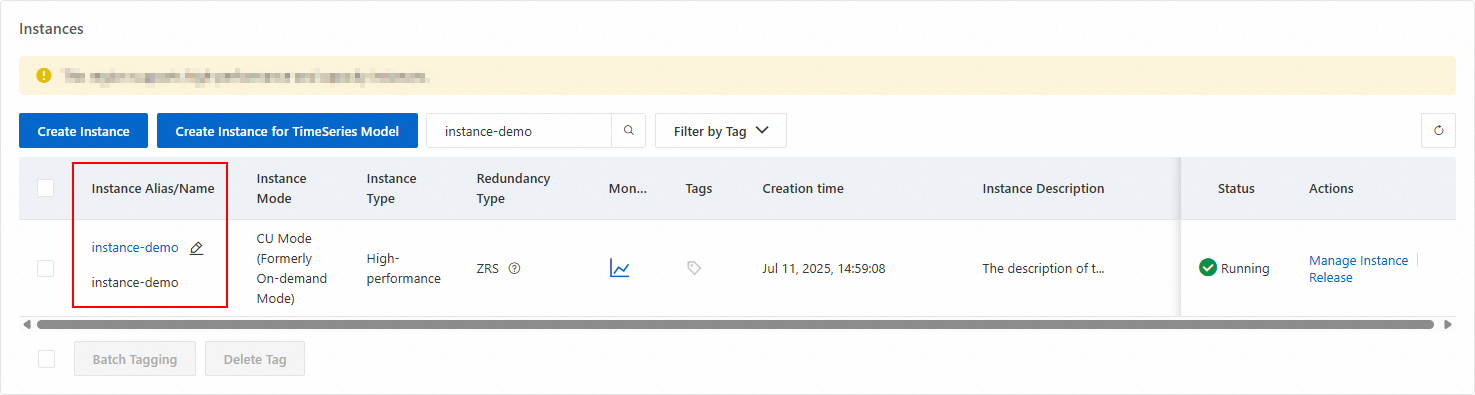
このトピックでは、インスタンスの作成を例に、Resource Orchestration Service (ROS) を介して Tablestore を使用する方法について説明します。
前提条件
手順
スタックページに移動します。
ROS コンソール にログインします。
左側のナビゲーションウィンドウで、 を選択します。
上部のナビゲーションバーで、リージョンを選択します。
スタックを作成します。
スタックページで、[スタックの作成] をクリックします。
[テンプレートの指定] セクションで、[既存のテンプレートを選択] をクリックし、[テンプレートのインポート方法] を [テンプレートコンテンツの入力] に設定します。
[テンプレートコンテンツ] セクションの [ROS] タブで、
YAMLまたはJSON形式でテンプレートを入力し、[次へ] をクリックします。V2 (推奨)
Tablestore インスタンスを作成するための V2 テンプレートの例を以下に示します。詳細については、「ALIYUN::OTS::InstanceV2」をご参照ください。
JSON形式{ "ROSTemplateFormatVersion": "2015-09-01", "Parameters": { "InstanceName": { "Type": "String", "Description": { "en": "Instance name.The naming specifications for instances are as follows:\nMust consist of English letters, numbers or dash lines (-).\nThe first character must be in English letters.\nThe end character cannot be a dash (-).\nInsensitive case.\nThe length is between 3 and 16 characters.\n" // インスタンス名の命名規則は以下のとおりです。\n英字、数字、またはダッシュ記号 (-) で構成されている必要があります。\n最初の文字は英字である必要があります。\n最後の文字はダッシュ (-) にすることはできません。\n大文字と小文字は区別されません。\n長さは 3 ~ 16 文字です。\n }, "Required": true, "AllowedPattern": "[A-Za-z][A-Za-z0-9\\-]*[A-Za-z0-9]$", "MinLength": 3, "MaxLength": 16 }, "ClusterType": { "Type": "String", "Description": { "en": "Cluster type (i.e. instance specification).\nEnumeration values:\nSSD: High performance.\nHYBRID: Capacity type." // クラスタタイプ (つまり、インスタンス仕様)。\n列挙値:\nSSD: 高性能。\nHYBRID: 容量タイプ。 }, "AllowedValues": [ "SSD", "HYBRID" ], "Required": true } }, "Resources": { "InstanceV2": { "Type": "ALIYUN::OTS::InstanceV2", "Properties": { "InstanceName": { "Ref": "InstanceName" }, "InstanceDescription": "The description of the instance.", // インスタンスの説明。 "ClusterType": { "Ref": "ClusterType" }, "NetworkSourceACL": [ "TRUST_PROXY" ], "NetworkTypeACL": [ "INTERNET", "VPC", "CLASSIC" ], "Tags": [ { "Key": "environment", "Value": "testing" // テスト } ] } } }, "Outputs": { "InstanceName": { "Description": "Name of the tablestore instance.", // Tablestore インスタンスの名前。 "Value": { "Fn::GetAtt": [ "InstanceV2", "InstanceName" ] } } } }YAML形式ROSTemplateFormatVersion: '2015-09-01' Parameters: InstanceName: Type: String Description: en: | Instance name.The naming specifications for instances are as follows: // インスタンス名。インスタンスの命名規則は以下のとおりです。 Must consist of English letters, numbers or dash lines (-). // 英字、数字、またはダッシュ記号 (-) で構成されている必要があります。 The first character must be in English letters. // 最初の文字は英字である必要があります。 The end character cannot be a dash (-). // 最後の文字はダッシュ (-) にすることはできません。 Insensitive case. // 大文字と小文字は区別されません。 The length is between 3 and 16 characters. // 長さは 3 ~ 16 文字です。 Required: true AllowedPattern: '[A-Za-z][A-Za-z0-9\-]*[A-Za-z0-9]$' MinLength: 3 MaxLength: 16 ClusterType: Type: String Description: en: |- Cluster type (i.e. instance specification). // クラスタタイプ (つまり、インスタンス仕様)。 Enumeration values: // 列挙値: SSD: High performance. // SSD: 高性能。 HYBRID: Capacity type. // HYBRID: 容量タイプ。 AllowedValues: - SSD - HYBRID Required: true Resources: InstanceV2: Type: ALIYUN::OTS::InstanceV2 Properties: InstanceName: Ref: InstanceName InstanceDescription: The description of the instance. // インスタンスの説明。 ClusterType: Ref: ClusterType NetworkSourceACL: - TRUST_PROXY NetworkTypeACL: - INTERNET - VPC - CLASSIC Tags: - Key: "environment" Value: "testing" // テスト Outputs: InstanceName: Description: Name of the tablestore instance. // Tablestore インスタンスの名前。 Value: Fn::GetAtt: - InstanceV2 - InstanceNameV1
Tablestore インスタンスを作成するための V1 テンプレートの例を以下に示します。詳細については、「ALIYUN::OTS::Instance」をご参照ください。
JSON形式{ "ROSTemplateFormatVersion": "2015-09-01", "Parameters": { }, "Resources": { "Instance": { "Type": "ALIYUN::OTS::Instance", "Properties": { "InstanceName": "instance-demo", // インスタンスデモ "Description": "The description of the instance.", // インスタンスの説明。 "ClusterType": "SSD", "Network": "NORMAL" } } }, "Outputs": { "InstanceName": { "Description": "Instance name", // インスタンス名 "Value": { "Fn::GetAtt": [ "Instance", "InstanceName" ] } }, "VpcEndpoint": { "Description": "Vpc endpoint", // VPC エンドポイント "Value": { "Fn::GetAtt": [ "Instance", "VpcEndpoint" ] } }, "PublicEndpoint": { "Description": "Public endpoint", // パブリックエンドポイント "Value": { "Fn::GetAtt": [ "Instance", "PublicEndpoint" ] } }, "PrivateEndpoint": { "Description": "Private endpoint", // プライベートエンドポイント "Value": { "Fn::GetAtt": [ "Instance", "PrivateEndpoint" ] } } } }YAML形式ROSTemplateFormatVersion: '2015-09-01' Parameters: {} Resources: Instance: Type: ALIYUN::OTS::Instance Properties: InstanceName: instance-demo // インスタンスデモ Description: The description of the instance. // インスタンスの説明。 ClusterType: SSD Network: NORMAL Outputs: InstanceName: Description: Instance name // インスタンス名 Value: Fn::GetAtt: - Instance - InstanceName VpcEndpoint: Description: Vpc endpoint // VPC エンドポイント Value: Fn::GetAtt: - Instance - VpcEndpoint PublicEndpoint: Description: Public endpoint // パブリックエンドポイント Value: Fn::GetAtt: - Instance - PublicEndpoint PrivateEndpoint: Description: Private endpoint // プライベートエンドポイント Value: Fn::GetAtt: - Instance - PrivateEndpoint[パラメータの設定] ステップで、スタック名を入力します。V2 の場合は、インスタンス名 ([InstanceName]) を入力し、インスタンスタイプ ([ClusterType]) を選択する必要もあります。詳細については、「スタック構成パラメータ」をご参照ください。
[作成] をクリックします。
スタックが作成されると、[スタック情報] タブの [ステータス] 列に [作成成功] と表示されます。
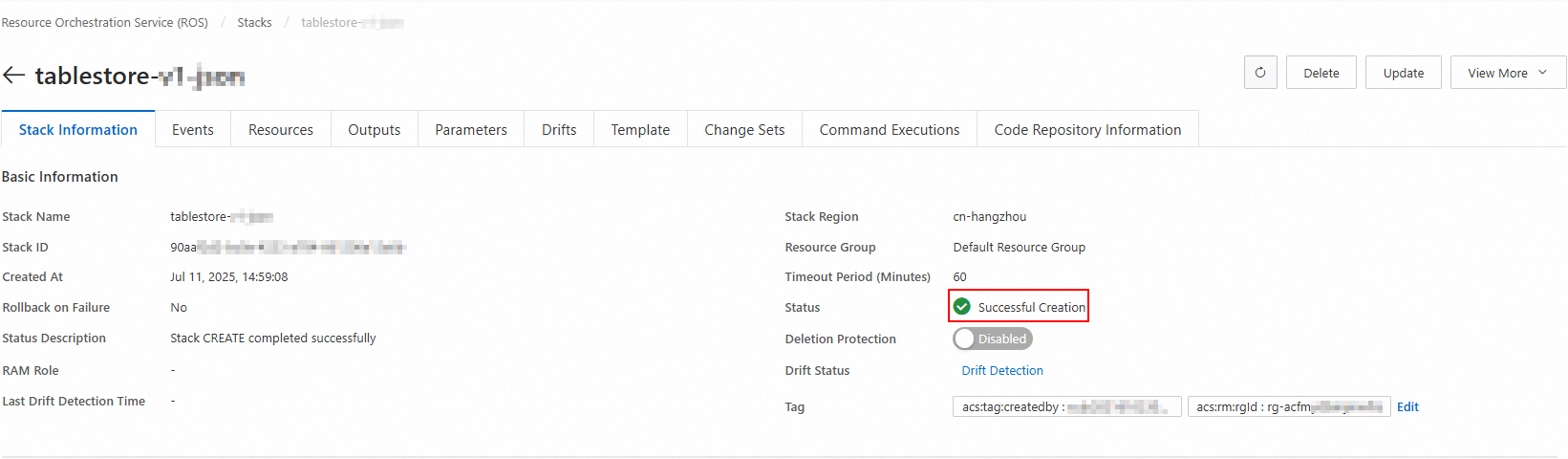
スタックを表示します。
[リソース] タブをクリックして、[リソース ID] (Tablestore インスタンス名) を表示します。

Tablestore コンソール にログインして、作成されたインスタンスを表示できます。