This topic describes how to create and configure an OpenSearch Industry Algorithm Edition application for the gaming industry, and how to test text search, vector search, and multimodal search queries.
Prerequisites
You must purchase an Industry Algorithm Edition instance. This edition cannot be changed to General-purpose Edition after creation.
Industry Algorithm Edition is available only for exclusive applications.
During configuration, you must associate every Field Tag with a field in the application schema and every Index Tag with an index in the index schema. Missing associations cause errors or block you from proceeding.
Gaming search features overview
The Gaming industry template provides pre-configured search capabilities. When you select the Gaming industry type, the following template features become available:
| Category | Features |
|---|---|
| Query Analysis | Term Weight Analysis Dictionary for Gaming, Synonym Dictionary for Gaming, Text Vectorization |
| Sort Policy | Multimodal Search, Text Relevance, Vector Relevance |
| Other Services | Drop-down Suggestions |
These features support three types of search:
Text search: Uses the Industry - General Analyzer for Gaming to tokenize and rank gaming-related content.
Vector search: Converts text queries into vector embeddings through the Text Vectorization feature, enabling semantic matching against a vector index.
Multimodal search: Combines text and vector search results through a unified search strategy, producing results that balance keyword relevance with semantic similarity.
Create an instance
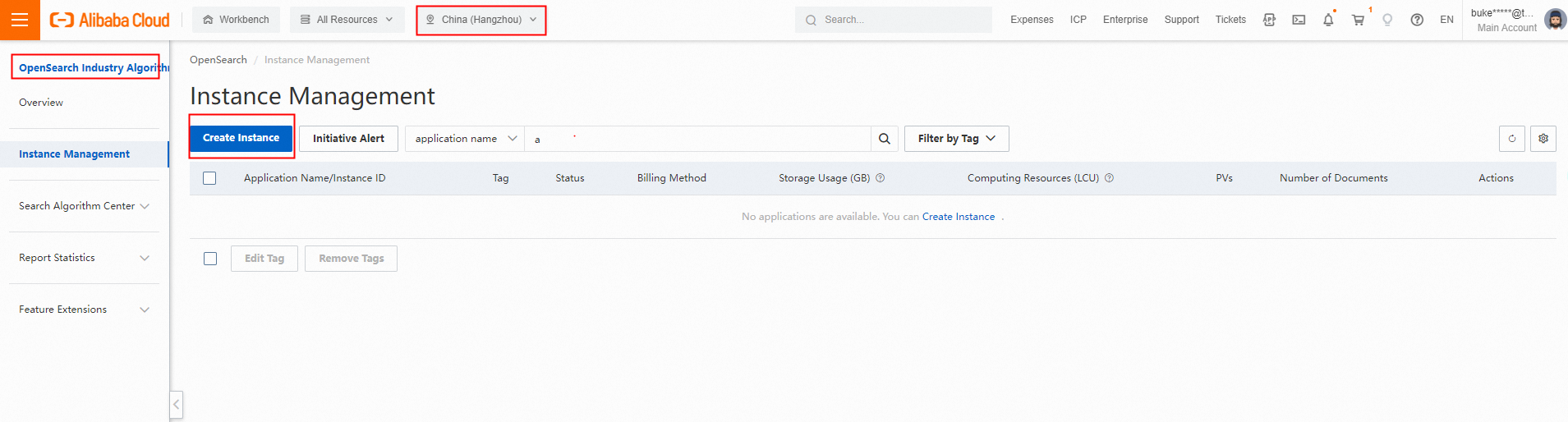
Log on to the OpenSearch Industry Algorithm Edition console. On the Instance Management page, click Create Instance.
On the buy page, set the following parameters:
NoteYou cannot change an application from Industry Algorithm Edition to General-purpose Edition after creation. Make sure you select the correct edition.
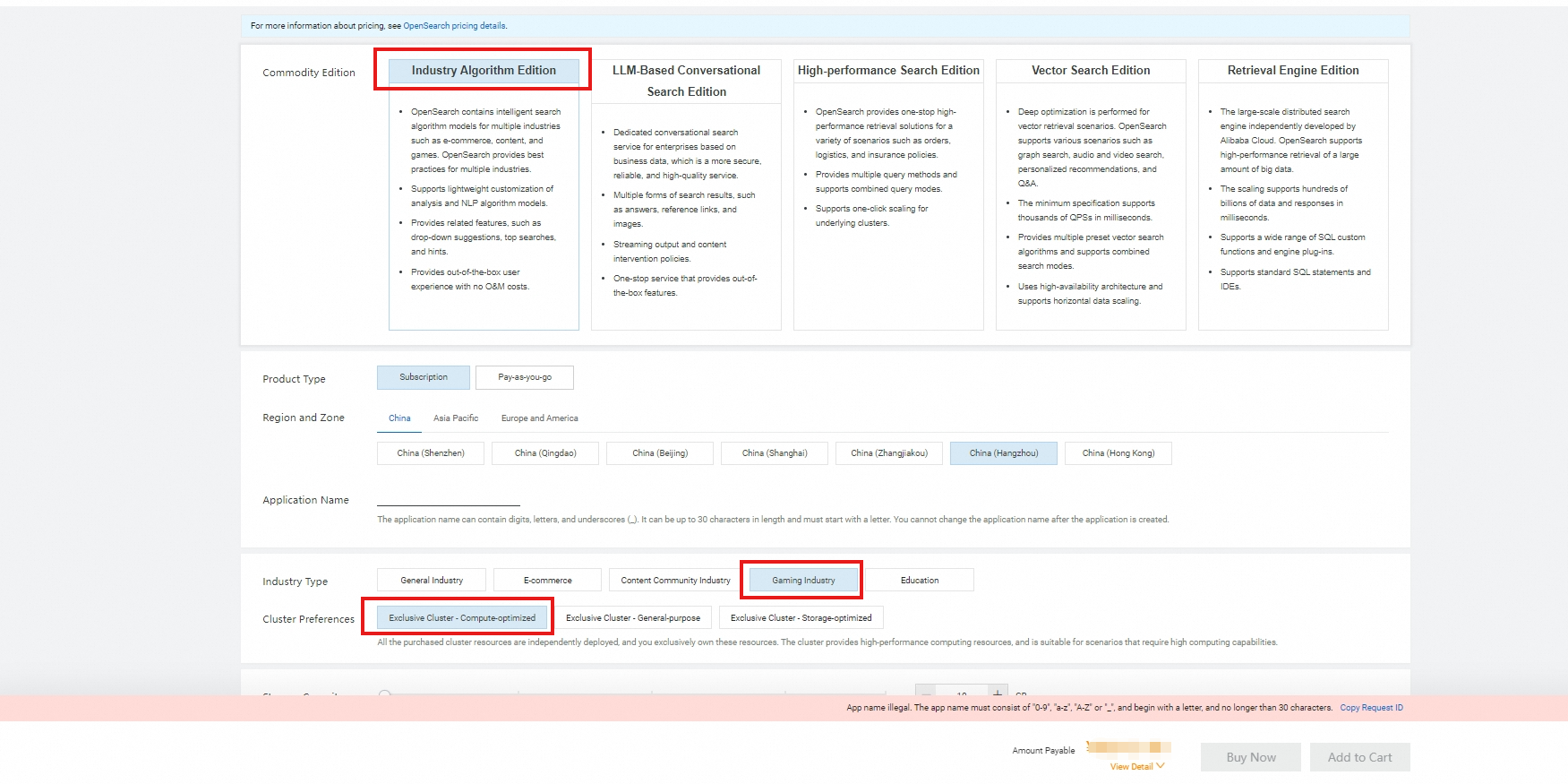
Commodity Edition: Industry Algorithm Edition
Industry Type: Gaming
Cluster Preference: Set based on your requirements.
For other parameters, use the same values as for General Industry.
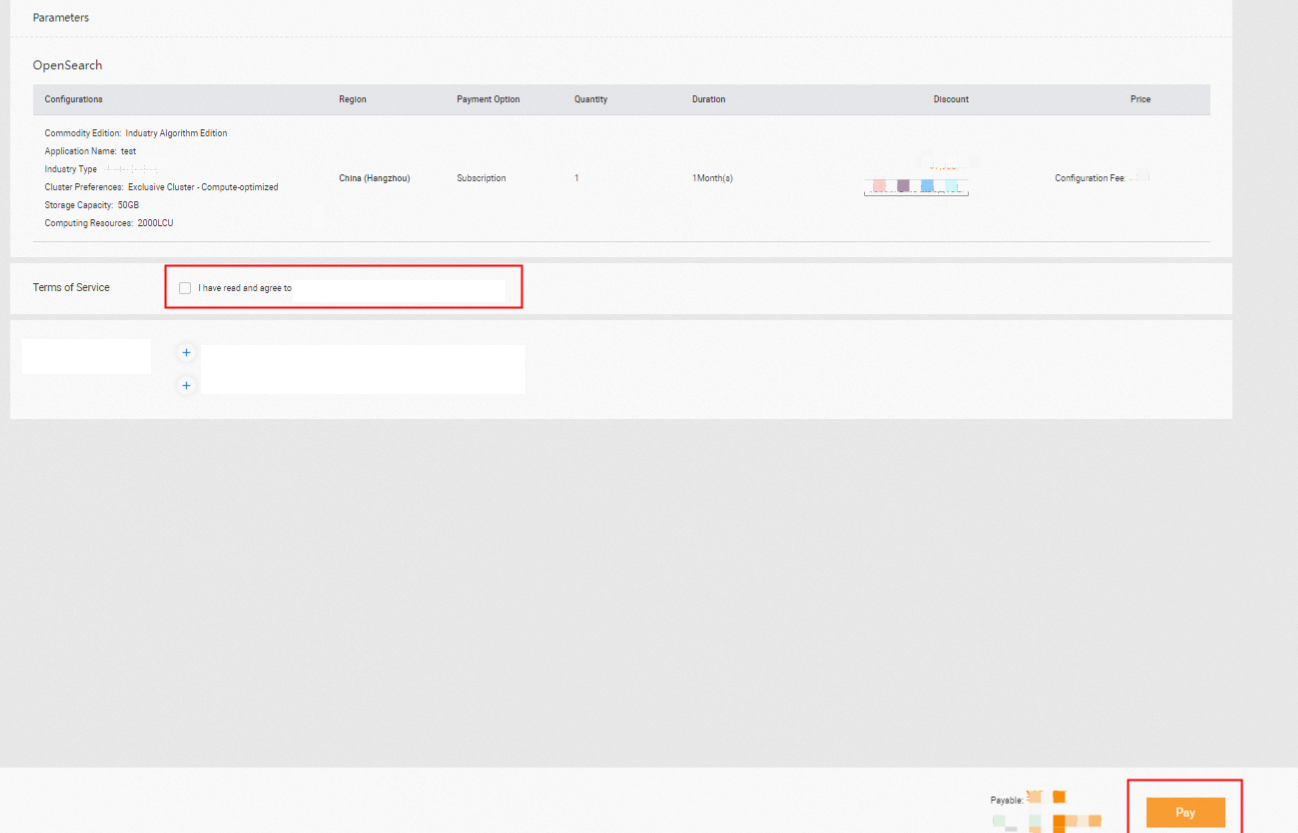
Click Buy Now and confirm the order.
Configure the application
After the application is created, find it on the Applications page and click Configure in the Actions column.
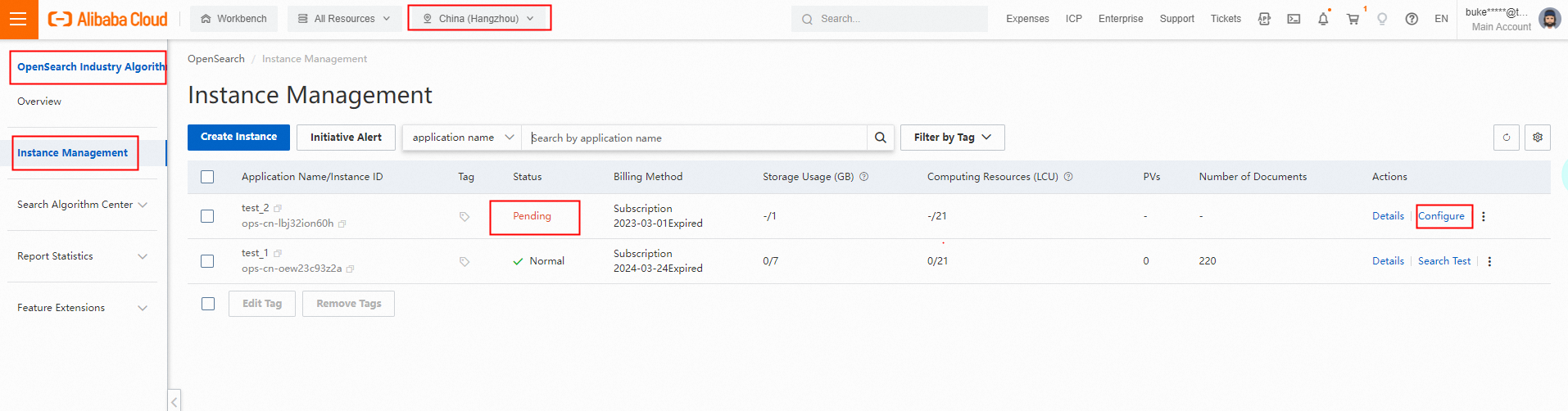
The configuration wizard has five steps: Feature Selection, Application Schema, Index Schema, Data Source, and Complete.
Step 1: Feature Selection
Set Selected Vertical to General, select the template features you need, and click Next. All template features are selected by default.
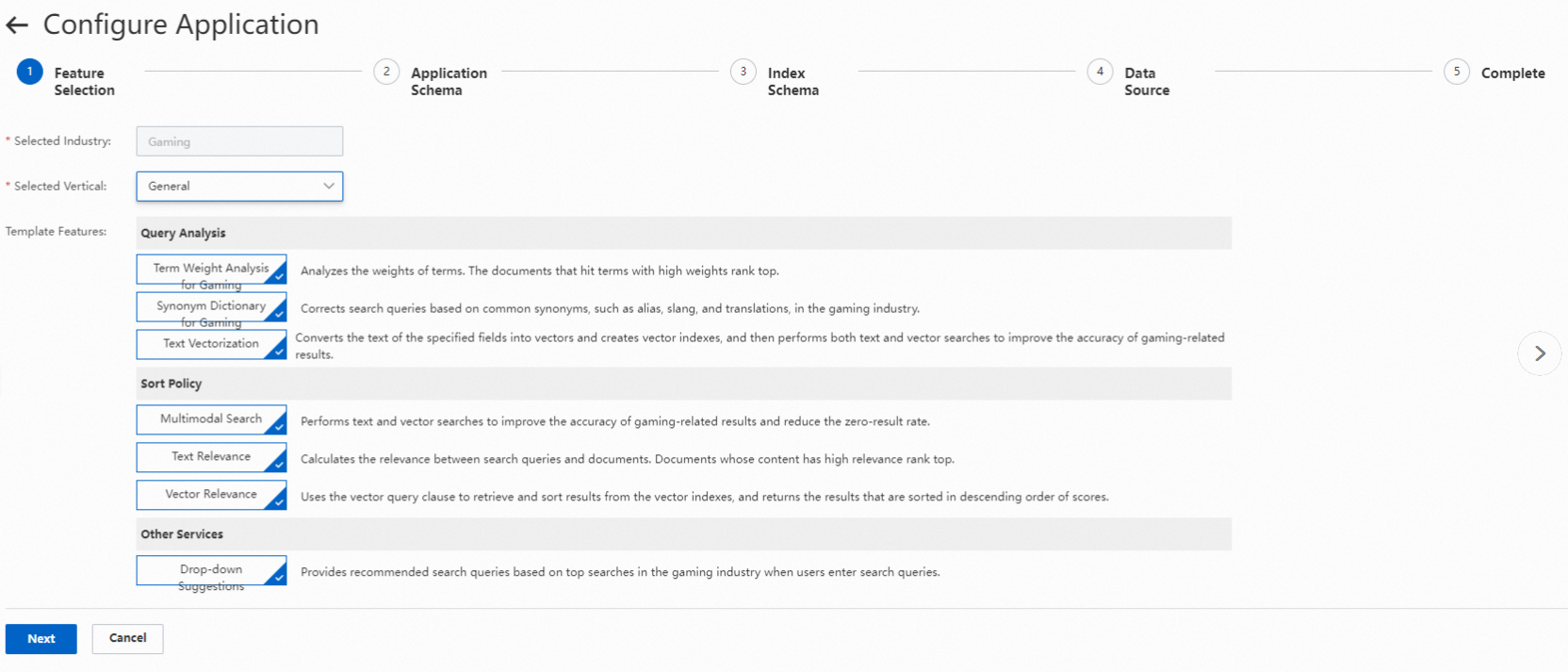
Template features are grouped into three categories:
Query Analysis: Term Weight Analysis Dictionary for Gaming, Synonym Dictionary for Gaming, and Text Vectorization.
Sort Policy: Multimodal Search, Text Relevance, and Vector Relevance.
Other Services: Drop-down Suggestions.
Step 2: Application Schema
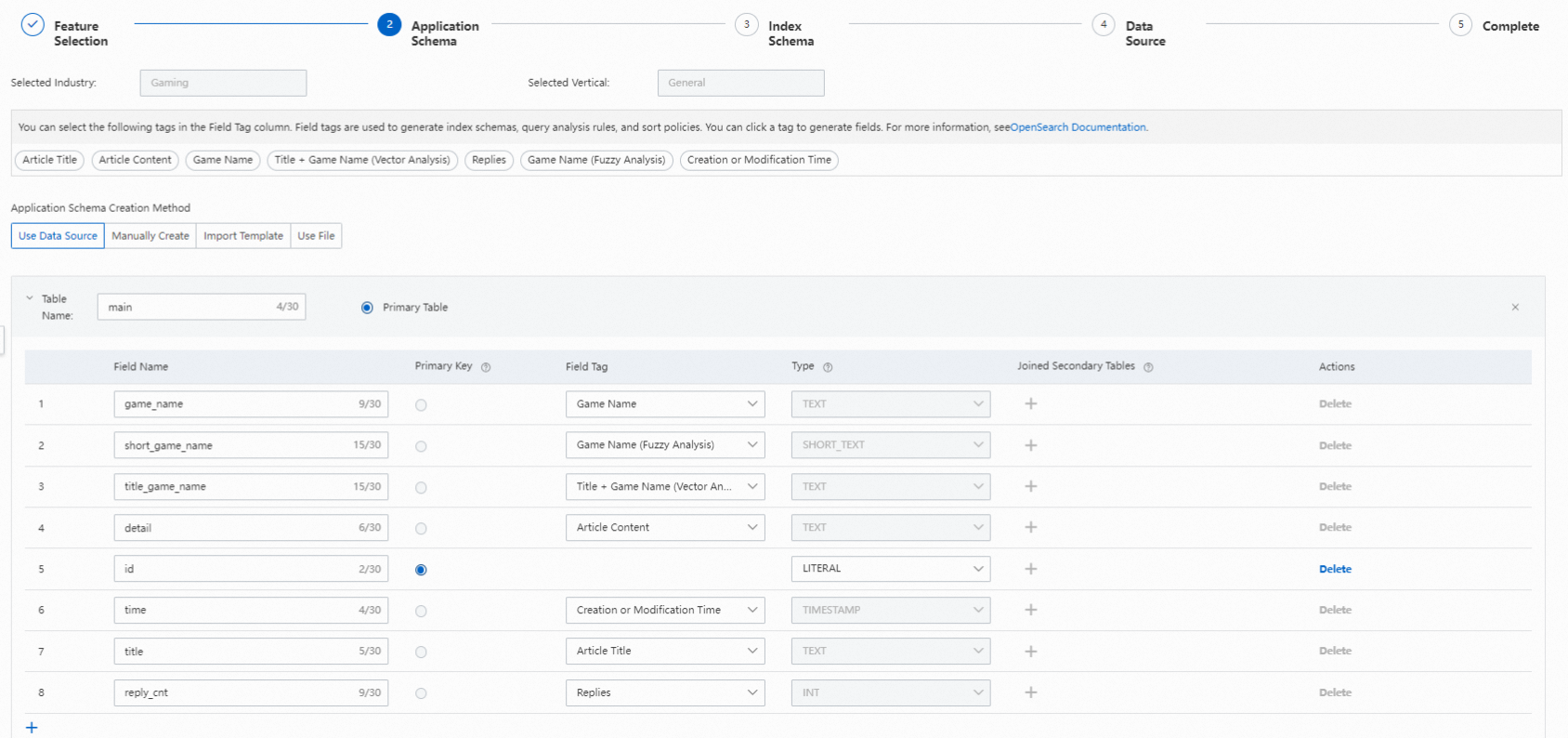
Select a creation method for Application Schema Creation Method. In this example, Manually Create is selected. Configure the required parameters and click Next.
Field tags are used to generate index schemas, query analysis rules, and sort policies for Industry Algorithm Edition applications. Each Field Tag must be associated with a specific field in the application schema. Otherwise, an error message is returned.
To generate a vector for a field, set the data type to TEXT and select Vector - General Gaming Vector as the Analysis Method.
Step 3: Index Schema
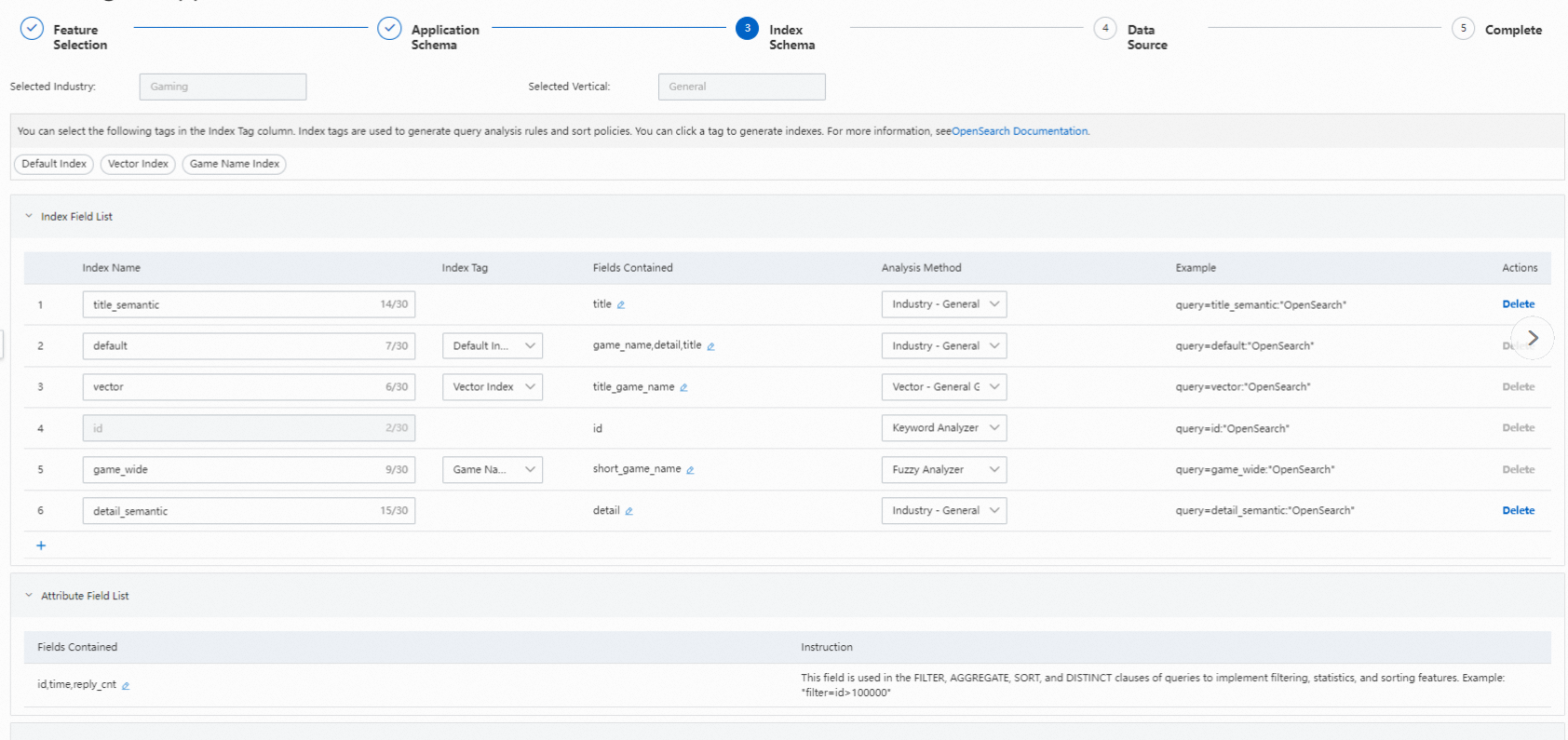
Index tags are used to generate query analysis rules and sort policies. Each Index Tag must be associated with a specific index in the index schema. Otherwise, you cannot proceed to the next step.
Configure the index schema by associating index tags with indexes:
Create a composite index on the fields associated with the Game Name, Article Title, and Article Content tags. Associate this composite index with the Default Text Index tag. In the Analysis Method column, select Industry - General Analyzer for Gaming.
If you selected Title + Game Name (Vector Analysis) for Field Tag in the Application Schema step, select Vector Index for Index Tag and Vector - General Gaming Vector for Analysis Method.
The Vector - General Gaming Vector index cannot be used alone. It takes effect only after you configure the Text Vectorization feature on the Query Analysis Rule Configuration page using the Industry - General Analyzer for Gaming index.
Step 4: Data Source
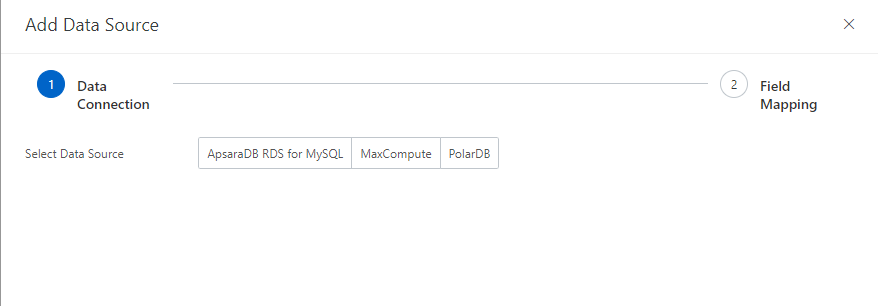
Configure a data source. OpenSearch supports the following data sources:
You can also upload data by calling API operations.
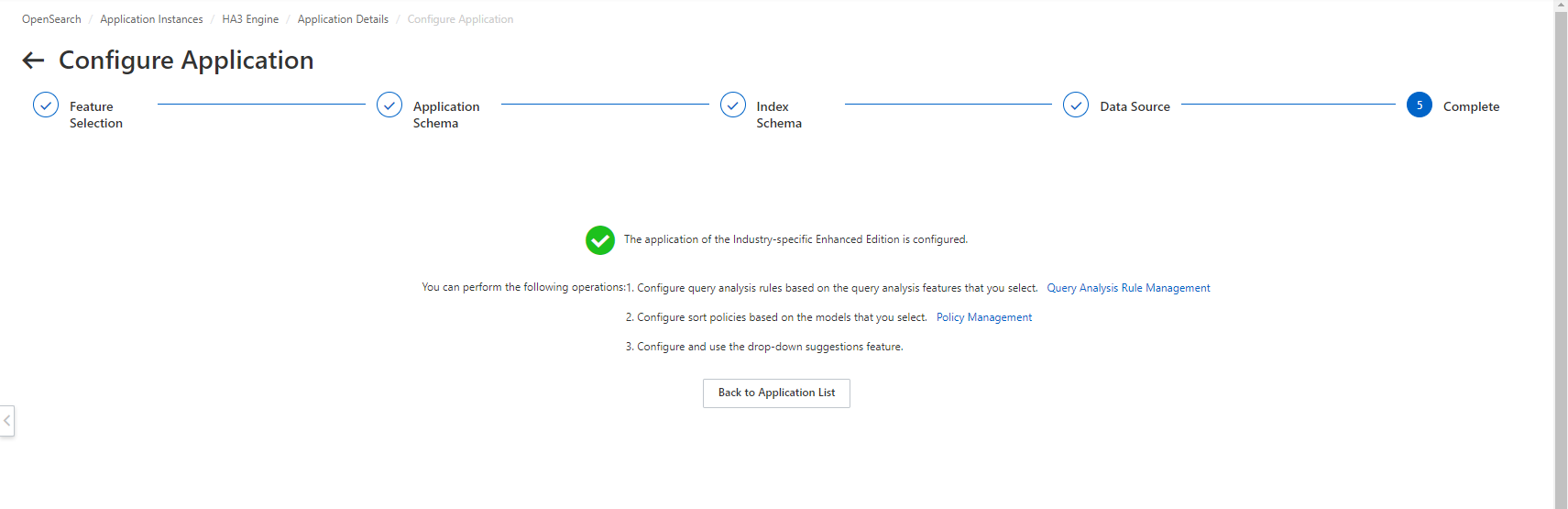
Step 5: Complete
Review and confirm your configuration.
Test your search
After index building completes, you can test text search, vector search, and multimodal search from the console.
Text search
In the left-side navigation pane, choose Feature Extensions > Search Test.
On the Search Test page, run a test using the index that corresponds to the Industry - General Analyzer for Gaming. For example, to search the default index, enter the following query clause:
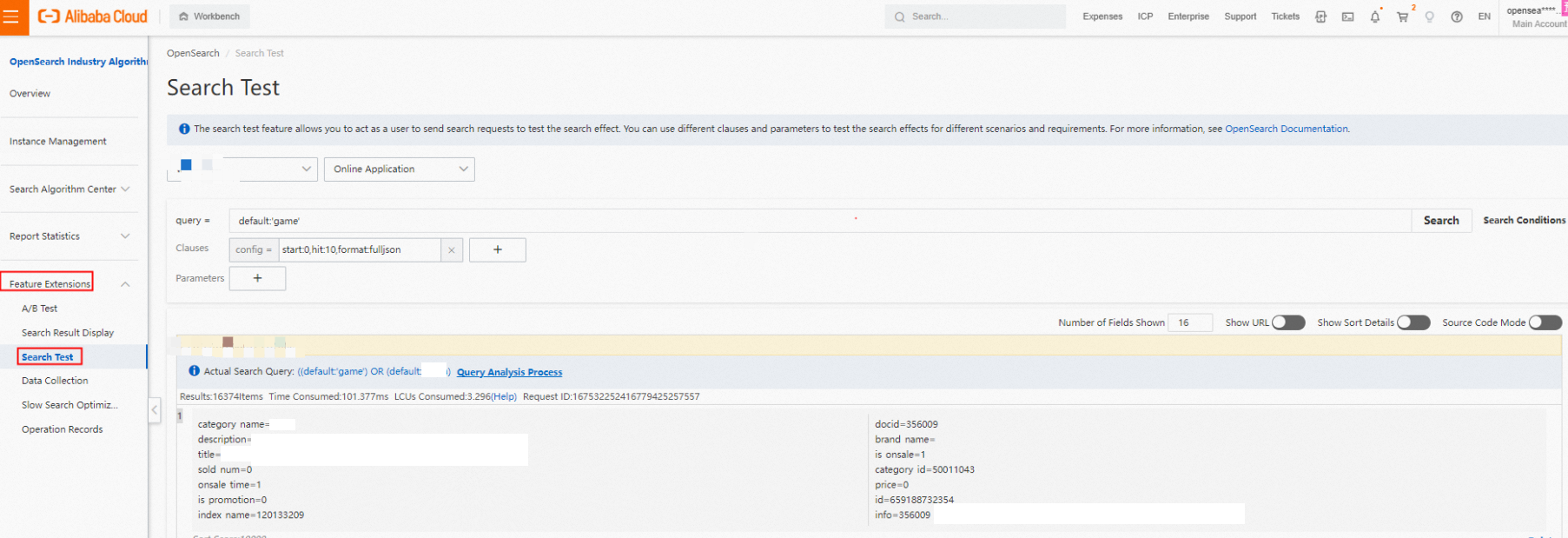
default:'游戏'
Vector search
To test vector search, you must first enable the Text Vectorization feature in Query Analysis, and then run a search with the required parameters.
Enable Text Vectorization
In the left-side navigation pane, choose Search Algorithm Center > Retrieval Configuration.
On the Retrieval Configuration page, click Query Analysis Rule Configuration.
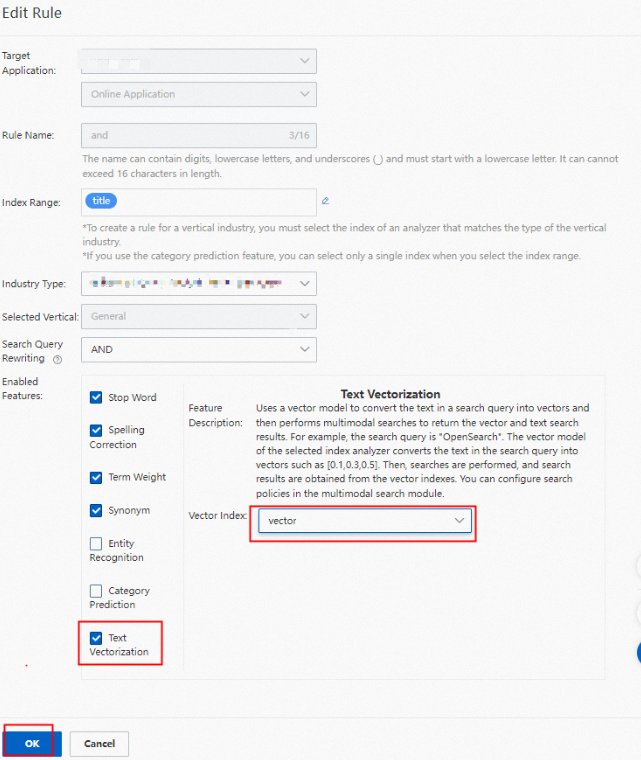
Configure the Text Vectorization feature for the default query analysis rule sys_default generated by the industry template.
ImportantThe vector index takes effect only after you configure the Text Vectorization feature in Query Analysis. Set the following values:
Analysis Method: Industry - General Analyzer for Gaming
Industry: Gaming
Vector Index: Vector - General Gaming Vector
Run the vector search test
In the left-side navigation pane, choose Feature Extensions > Search Test.
On the Search Test page, add the following parameters and run the test:

Parameter Value Description querydefault:'game'The search clause. Searches the default index for the term "game". qpsys_defaultThe query analysis rule generated by the industry template. raw_querygameThe raw query text used for text vectorization. query=default:'game' qp=sys_default raw_query=game
Multimodal search
Industry Algorithm Edition generates a default multimodal search policy named sys_strategy for your instance.
In the left-side navigation pane, choose Feature Extensions > Search Test.
On the Search Test page, set the following parameters:

Parameter Value Description querydefault:'game'The search clause. Searches the default index for the term "game". qpsys_defaultThe query analysis rule generated by the industry template. raw_querygameThe raw query text used for text vectorization. search_strategysys_strategyThe multimodal search strategy generated by the industry template. query=default:'game' qp=sys_default raw_query=game search_strategy=sys_strategy