
In the past six months, Agent products for end users have been changing almost every week. For products such as OpenClaw and Hermes, version iterations occur one after another, and product forms continue to evolve.
This matter is actually a bit conflicting for developers: you just make a workflow run smoothly on one product, and your team might feel that another product is easier to use. Which one should the underlying operating system layer be bound to?
The answer of ANOLISA version v0.5 is very simple: bind to none. ANOLISA integrates into whatever framework you are using. The biggest action in this version is that, after OpenClaw, it completes full adaptation for Hermes. At the same time, the two major features of security and snapshot continue to undergo critical upgrades. This ensures that "integrating" does not just mean "able to run," but rather "obtaining the full set out of the box."
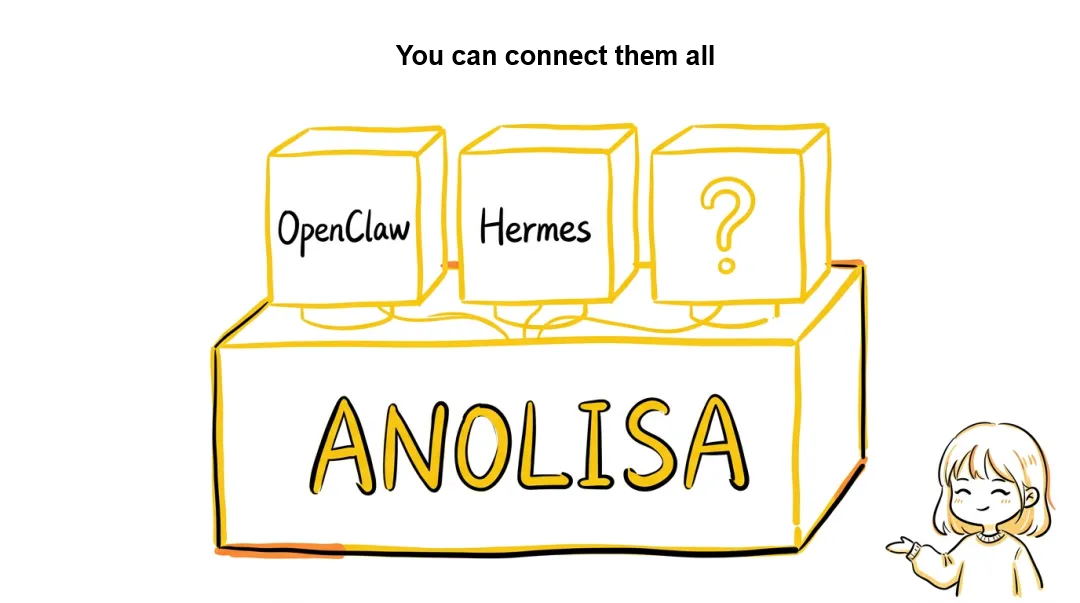
In the past, several core capabilities of ANOLISA—security signature validation before Skill invocation, full-link observability of the Agent, and Turn (each round of dialogue)-level automatic snapshots—only ran completely on OpenClaw. If your team chooses Hermes, you might be a bit conflicted: these capabilities look very attractive, but to enjoy them, do you have to change the framework? The answer this time is "no need to change." Starting from this version, Hermes and OpenClaw enjoy completely peer capability support on ANOLISA. You do not need to perform any tool migration. You can simply enable the corresponding configuration: pre-signature validation for Skill, observable event stream, and automatic snapshot plugin. All three main capability lines land in the native form of Hermes. They are not wrappers or downgraded versions.
More importantly, it is the attitude behind this matter. The landscape of Agent frameworks is still evolving. No one can draw a conclusion on what the "future standard" is now. A solid operating system should allow all frameworks to run more stably on it. In the future, ANOLISA will also successively support more Agent frameworks.
ANOLISA is not picky about Agents, and the natively supported Agents will increase in number.
In the past, the cornerstone of security capabilities was "prevention" (protection against SQL injection attacks, protection against unauthorized access, and protection against out-of-bounds access), but in the Agent scenario, relying solely on "prevention" is far from enough. In actual implementation, we also need to build a more comprehensive security perspective: a third-party Skill is updated this week. Is it corrupted by the update? A line of red text pops up from an alert. Which tool calling does it correspond to? How do that string of phone numbers and AccessKey in the log secretly sneak into the model context?
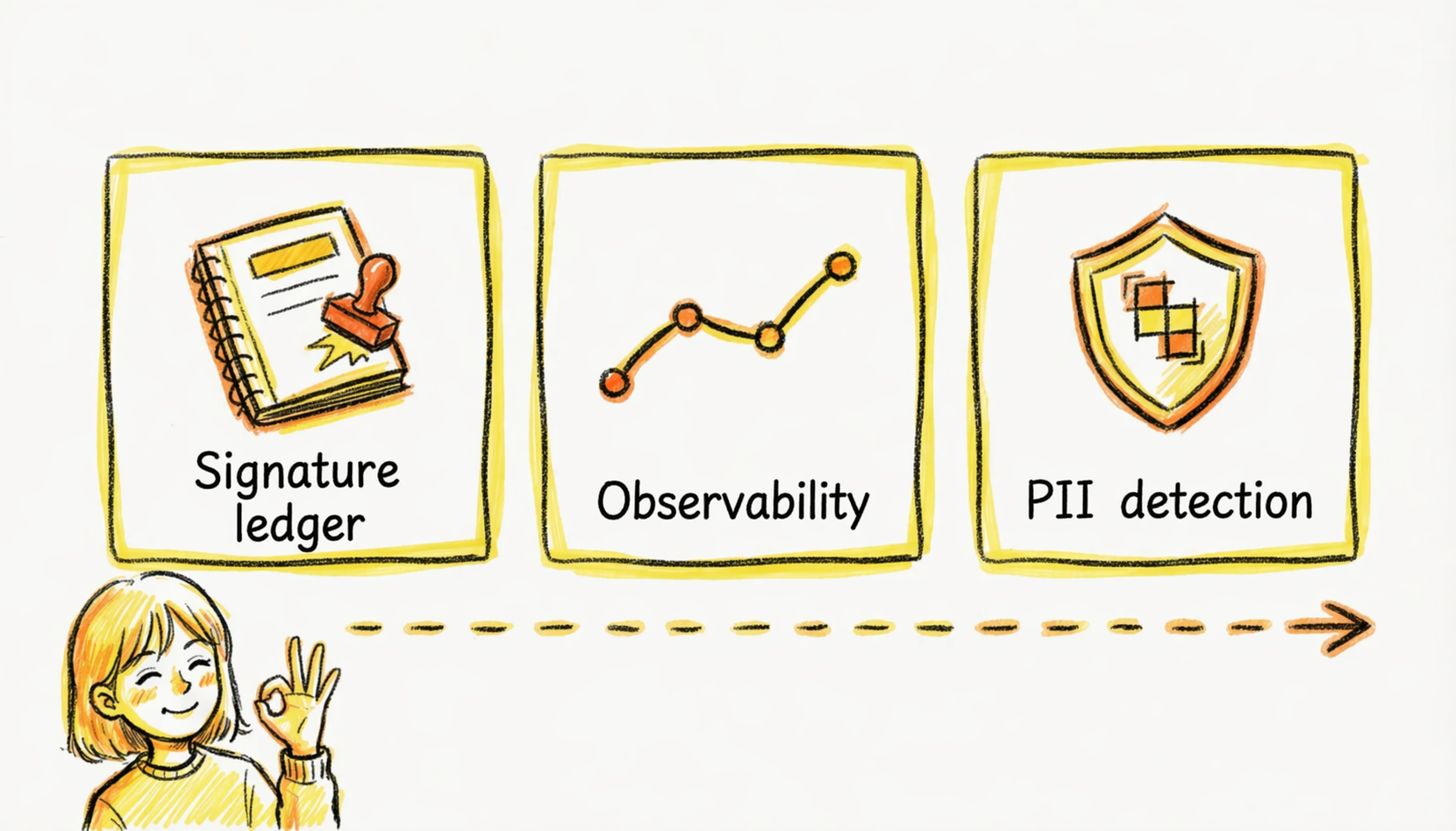
Now, the AgentSecCore widget of ANOLISA fills this gap. It completes the capabilities of "being visible, traceable, and manageable after prevention":
• Skill Ledger (Skill signature ledger) upgrades to level-6 security status management. The file hash, signature Manifest, and version chain of the Skill folder are under unified management. Upgrades or tampering of third-party Skills are detected within seconds. The capability already supports one-click access for OpenClaw, Copilot Shell (short for Cosh), Hermes, and others. The status is automatically verified before each Skill is invoked. You no longer need to "remember to scan it again."
• Security observability sets security observation points at critical points of the Agent run. Security events and tool calling automatically link related information together. A single alert can be directly traced back to the incident scene. You no longer need to manually flip through logs.
• PII Checker (sensitive information detection) is embedded in the Agent input link. It supports the detection of multiple common sensitive information types. The sensitive information is detected and desensitized before it enters the model. The desensitization-first design means that the alert sample itself does not send back the original text.
The Agent can work autonomously, but every autonomous action must leave a traceable mark.
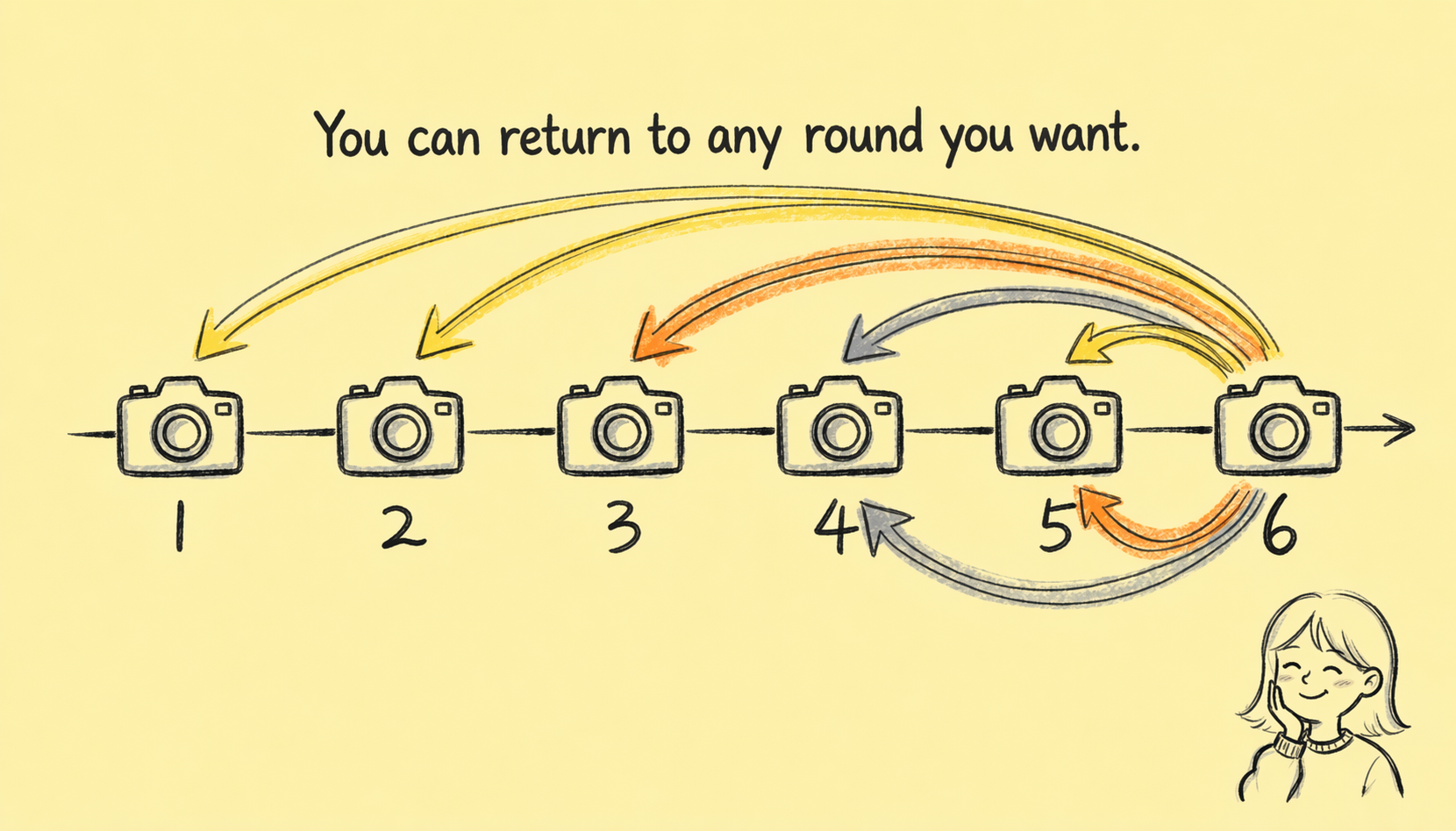
You probably have experienced this moment: after you ask the Agent to modify the code for several rounds, you suddenly find that the version from three rounds ago is the correct one, but you can no longer go back.
The Turn-level automatic snapshot brought by the ws-ckpt widget in this version completely resolves this pain point: after each round of Agent dialogue ends, the ws-ckpt widget automatically creates a snapshot archive point for your workspace without any manual operation. A baseline is established when the session starts, and an automatic snapshot is saved when each round ends. The snapshot message also includes the user instruction summary of the current round. Reviewing them is similar to reviewing chat records, which makes it convenient for you to quickly locate the workspace status of any round for rollback, whether it is the previous round, three rounds ago, or ten rounds ago.
Around this main theme, the ws-ckpt widget also provides three features to make "automatic archive" more convenient:
• Multi-platform plug and play: The first batch of published Agent plugins includes OpenClaw and Hermes. No matter which AI programming assistant you use in your daily work, you can install the plugin and enable autoCheckpoint to enjoy fully automatic archive protection, without the need to memorize commands or switch terminals. Skill invokes also support freely specifying the workspace path. In parallel development of multiple projects, each project manages its own workspace snapshot.
• More precise change tracking: File change detection is more accurate. Previously, such operations often resulted in false positives such as "delete + add". Now, they can be accurately displayed as one rename operation, which helps you quickly determine which round imported the problem before rollback.
• Comprehensive stability reinforcement: Fault tolerance processing for a large number of border scenarios is enhanced. The probability of encountering abnormal breaks or inconsistent statuses in use is significantly reduced, and the overall run is more reliable.
You can go back to any round: revoking no longer has a "distance limit".
The latest version of Agentic OS (ANOLISA) is now available on the following platforms:
• Github: https://github.com/alibaba/ANOLISA
• ECS Console (select "Alibaba Cloud Linux 4 LTS 64 bit Agentic Edition"): https://ecs-buy.alibabacloud.com/ecs
For core widget feature updates, please refer to https://www.alibabacloud.com/help/en/alinux/releasenotes
The More Capable the Agent, the Less You Dare to Let Go? ANOLISA Gives It Full Protection
No More Panic Over 3 AM Alerts! Pinpoint the Root Cause in One Click with SysOM Inspection Skill

115 posts | 6 followers
FollowOpenAnolis - July 15, 2026
OpenAnolis - July 15, 2026
OpenAnolis - June 24, 2026
OpenAnolis - July 14, 2026
Alibaba Cloud Native Community - May 18, 2026
ApsaraDB - June 26, 2026
115 posts | 6 followers
Follow Token Plan
Build more, spend less. One plan, every modality.
Learn More
Alibaba Cloud Model Studio
A one-stop generative AI platform to build intelligent applications that understand your business, based on Qwen model series such as Qwen-Max and other popular models
Learn More Qwen
Qwen
Full-range, open-source, multimodal, and multi-functional
Learn More Managed Service for Prometheus
Multi-source metrics are aggregated to monitor the status of your business and services in real time.
Learn MoreMore Posts by OpenAnolis

