Quick BI Smart Q Skill Package is designed to bring AI-native analytics into real business workflows. It allows users to ask questions in natural language, interpret dashboards, discover business insights, and generate structured reports through capabilities such as Q Chat, Q Dashboard, Q Insight, and Q Report.
For ecommerce teams, this means business users no longer need to rely only on manual exports, SQL requests, or static dashboards. Instead, they can interact with data more directly, understand what is happening across platforms, and move from analysis to action faster.
Let’s look at a practical ecommerce scenario.
Imagine a women’s leather bag brand selling products across Shopify, Amazon, and Alibaba Express. The product portfolio includes luxury design bags, soft leather tote bags, full grain leather bags, and wholesale design bags.
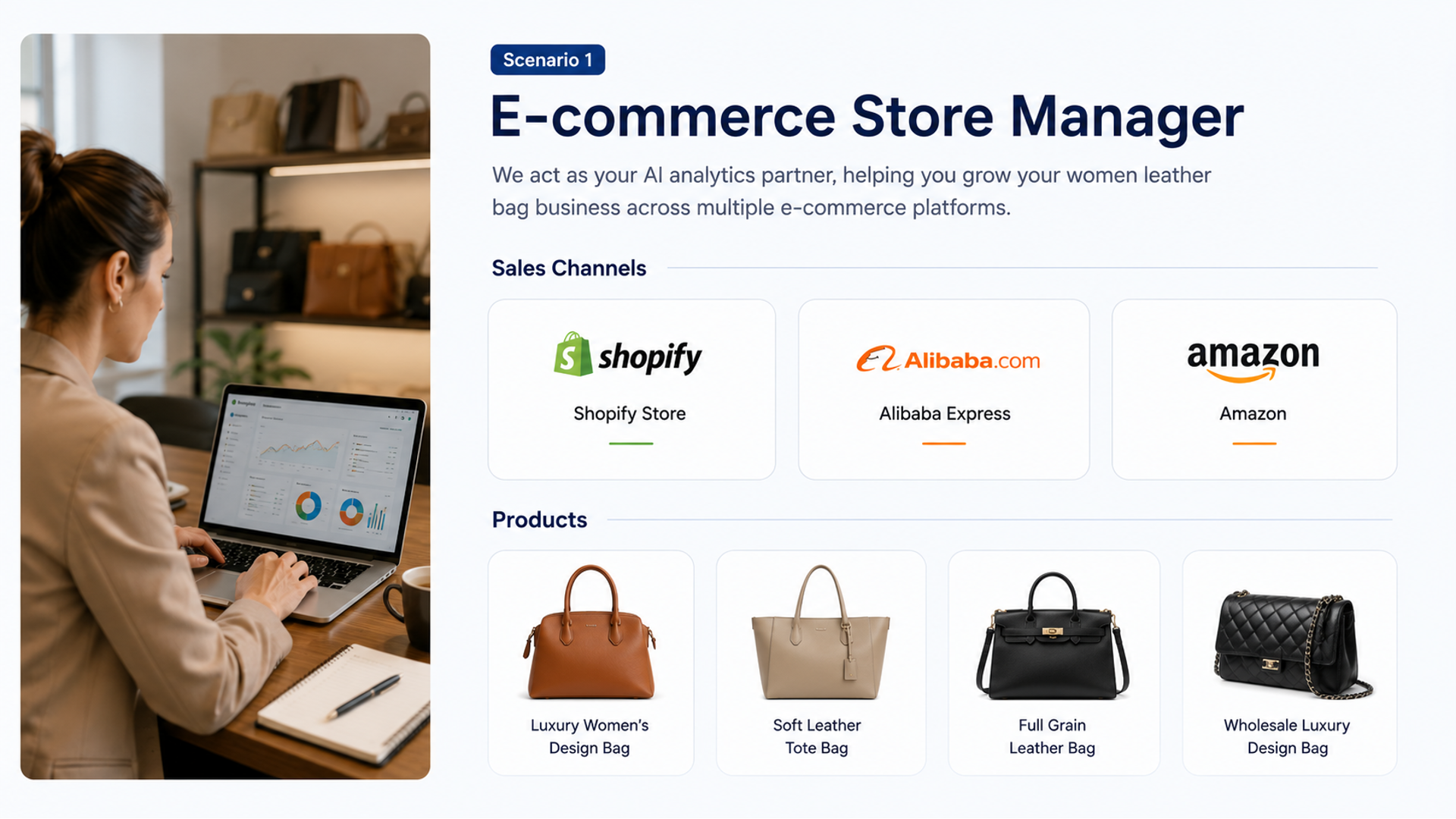
Sales data comes from order tables. Traffic data comes from platform and marketing channels. Inventory data is tracked by product and platform. Customer feedback comes from product reviews, while external sentiment may appear on Instagram and Reddit.
The challenge is clear: ecommerce data is valuable, but it is also fragmented.
A store manager needs to answer questions such as:
This is where Quick BI Smart Q Skill Package can help.
With Smart Q Skill, ecommerce managers can ask business questions directly in natural language.
For example:
“Compare sales performance across Shopify, Amazon, and Alibaba Express. Identify which platform and marketing channel deliver the highest revenue and ROI for each bag product, and highlight trends by product and region.”
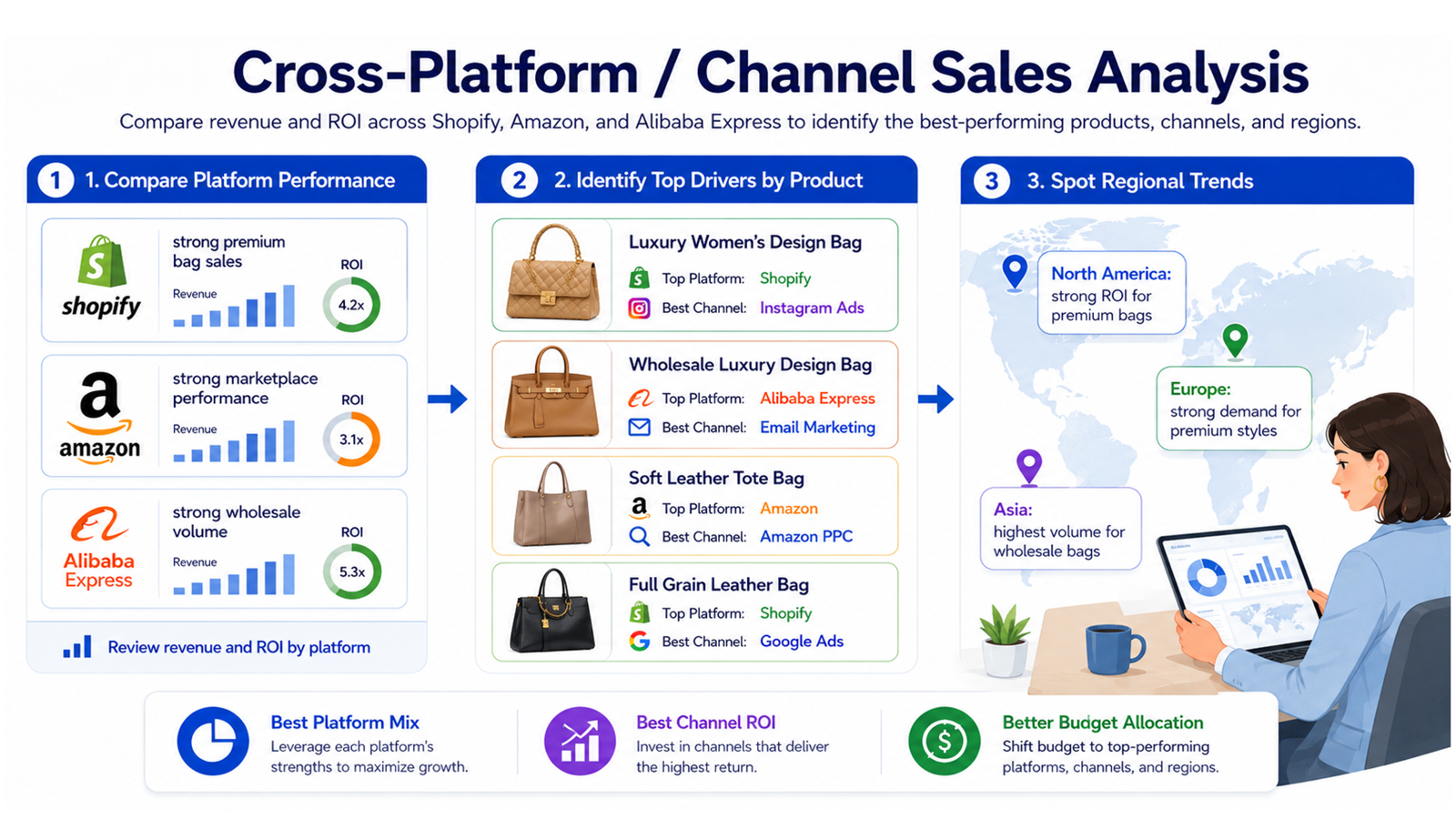
Instead of manually checking separate reports, the user can quickly understand cross-platform performance. In this scenario, Shopify may generate the highest revenue, especially for luxury and soft leather bags, while Amazon maintains stable sales and Alibaba Express contributes moderate but meaningful volume.
For the business team, this changes the analytics experience from “searching for data” to “asking for answers.”
Inventory is one of the most important areas for ecommerce operations.
In this scenario, each platform may start with a large initial stock, but demand changes at different speeds. Shopify may sell faster than expected, while Amazon and Alibaba Express still hold sufficient inventory.
Without timely alerts, the business may face a common problem: the best-performing platform runs out of stock while inventory remains unused elsewhere.
With Q Insight, teams can monitor abnormal changes, identify low-stock risks, and generate recommendations.
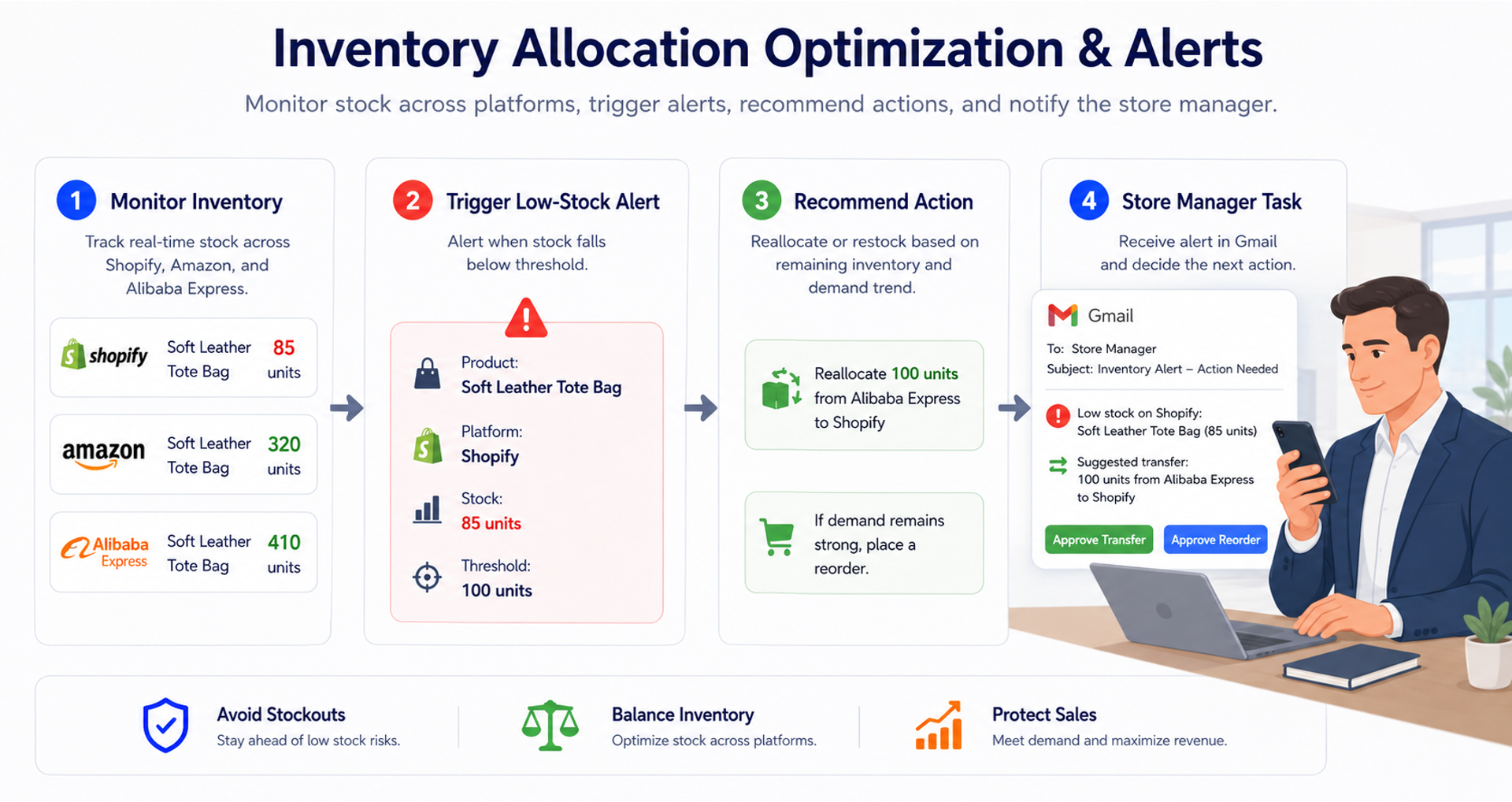
For example, if the Soft Leather Tote Bag drops below 50 units on Shopify while Amazon and Alibaba Express each still have more than 300 units, Smart Q can help highlight the risk and recommend reallocation.
The insight is not just “stock is low.”
The real business value is the next step: transfer inventory, adjust future allocation ratios, or place new orders before sales are lost.
Ecommerce performance is not only about sales and inventory. Customer feedback is equally important.
Product reviews may show that customers are satisfied with the quality and design of luxury and soft leather bags. At the same time, lower ratings for certain products may reveal issues around price, design, delivery, or expectations.
External channels can add another layer of insight. Social media discussions on platforms such as Instagram and Reddit may reveal customer preferences, complaints about stockouts, or demand for new styles and colors.
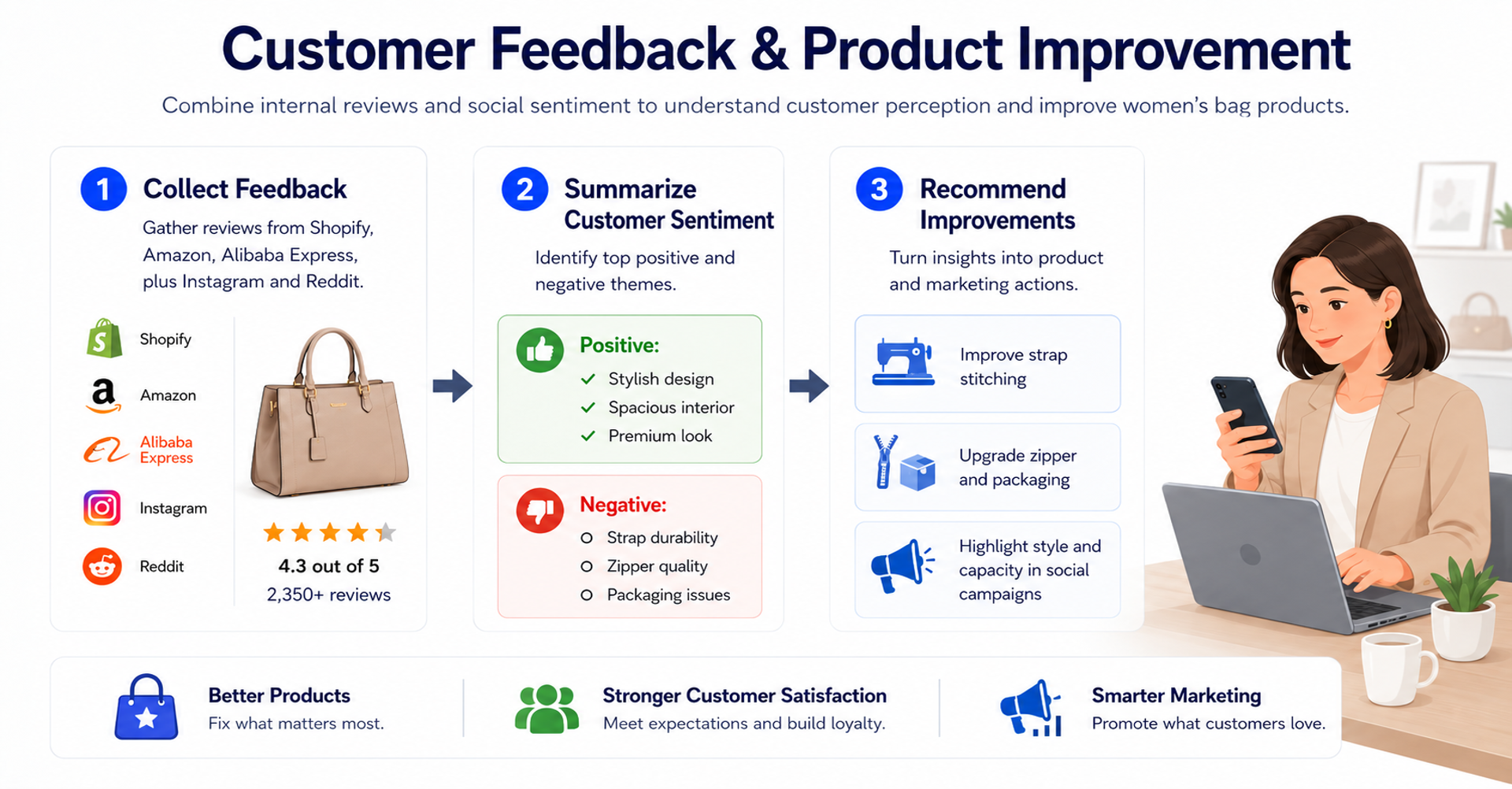
With Smart Q, teams can combine internal review data with external sentiment signals to better understand customer perception.
This can help answer questions such as:
For ecommerce teams, this turns customer feedback into a practical input for product development, inventory planning, and campaign strategy.
The next generation of business intelligence is not only about building more dashboards.
It is about making analytics easier to access, easier to understand, and easier to act on.
For ecommerce businesses, speed matters. A delayed inventory alert can lead to lost sales. A missed customer complaint can affect brand perception. A slow performance review can cause teams to spend marketing budget in the wrong place.
Quick BI Smart Q Skill Package helps ecommerce teams work in a more AI-native way:
In a multi-platform ecommerce environment, data is everywhere. The real advantage comes from turning that data into timely decisions.
With Quick BI Smart Q Skill Package, ecommerce analytics becomes more conversational, proactive, and actionable.


1,447 posts | 502 followers
FollowAlibaba Cloud Community - June 23, 2026
Neel_Shah - August 13, 2025
Alibaba Cloud Community - June 1, 2026
Alibaba Cloud Big Data and AI - April 15, 2026
ApsaraDB - October 24, 2025
Alibaba Cloud Community - February 5, 2026
1,447 posts | 502 followers
Follow Intelligent Robot
A dialogue platform that enables smart dialog (based on natural language processing) through a range of dialogue-enabling clients
Learn More Big Data Consulting for Data Technology Solution
Alibaba Cloud provides big data consulting services to help enterprises leverage advanced data technology.
Learn More Big Data Consulting Services for Retail Solution
Alibaba Cloud experts provide retailers with a lightweight and customized big data consulting service to help you assess your big data maturity and plan your big data journey.
Learn More E-Commerce Solution
Alibaba Cloud e-commerce solutions offer a suite of cloud computing and big data services.
Learn MoreMore Posts by Alibaba Cloud Community

